

Inside the Couture Pattern Museum
Let's talk couture, patterns, history, and more ✨

Tucked away in Santa Barbara’s arts district is the Couture Pattern Museum, the only one of its kind in the world.
On a bright Friday morning, I made the hour-plus drive up the coast to take a tour with the museum’s founder and fashion historian, Cara Austine-Rademaker. Her work is focused on preserving an incredibly niche part of history: couture sewing patterns.
In doing so, she is also preserving a kind of knowledge that was passed down through workroom practice, rather than recorded in textbooks or shared online.
These paper couture sewing patterns offer a rare window into a designer’s way of working, revealing their secrets of shape and balance, of cut and line, and construction.
But before we can talk about couture patterns, we need to start with couture itself.
In this edition of Classic Cool Sewing, we explore:
What Is Couture?
A (Very) Brief History of Couture
Inside the Couture Pattern Museum: The Work of Preservation
Inspiration from the Museum
My Favorite Couture Sewing Books
1. What Is Couture?
Historically, couture meant dressmaking, but today it’s synonymous with bespoke fit, exquisite craftsmanship, flawless hand finishing, and a rarefied price point. Essentially, the most exquisitely crafted clothes in the world.
Couture pieces are made specifically for an individual’s measurements. The process involves numerous steps and people with specialized skills, from the couturier, or designer, who creates the design to the team of assistants, cutters, and needleworkers who bring it to life. A workroom team of four to eight people may spend 70 to 90 hours to create a simple day dress and hundreds (even thousands) of hours on a richly embellished gown.
Schiaparelli’s Spring 2026 Couture Look 11 is a perfect example of the meticulous work behind a single look: “Defying gravity gown in ivory tulle with a sfumato effect and scissor-hem. At the top, a crested bustier covered with 25,000 silk thread feathers, which required roughly 4000 hours of work […] At the bottom, different shades and layers of tulle are stacked together to bring this aerodynamic volume.”
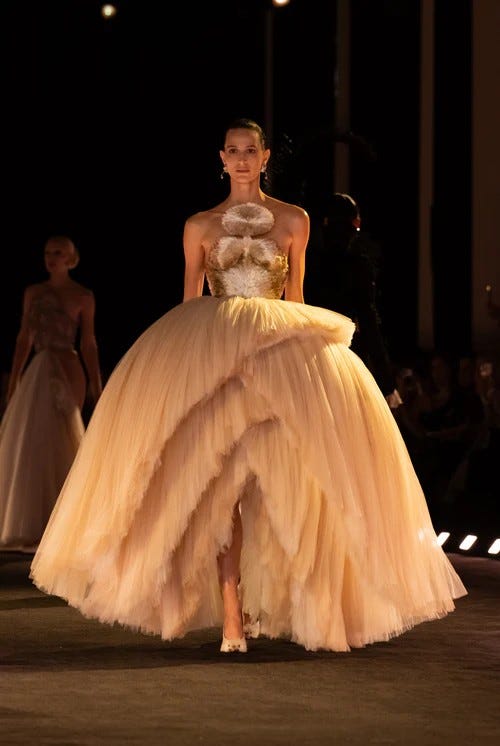
Keep in mind, custom fit is more than just measurements. It’s also about proportion and the eye. Take the above look. Two clients order it: one a curvy petite woman and the other tall and slender. Both the bustier and the voluminous high-low skirt would scale differently so the design reads as most flattering on both women.
Couture designs also follow the codes of the house, which give each maison a recognizable identity.
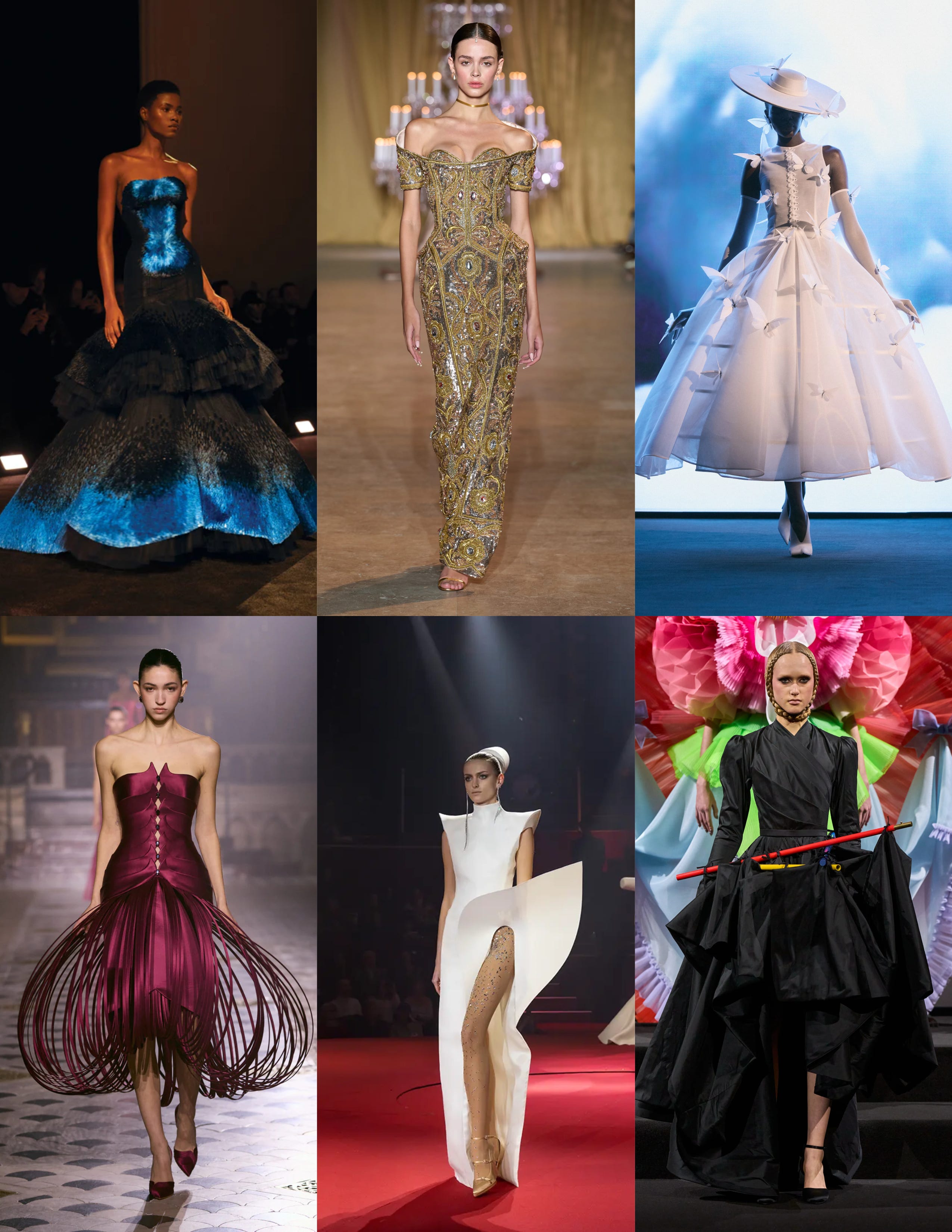
Haute Couture
Haute couture (French for “high sewing” or “high dressmaking”) is a legally protected term in France, regulated by the Fédération de la Haute Couture et de la Mode (FHCM), the governing body of the French fashion industry and organizer of Paris Fashion Week and Haute Couture Week.
To use the designation, a house must maintain an atelier in Paris with at least 20 technical staff, and present a collection of 25–50 original designs (both day and evening wear) twice a year (January and July). When a client orders a piece, it must be bespoke, handmade, and custom-fitted.
2. A (Very) Brief History of Couture
With an emphasis on paper patterns.
The origins of haute couture are attributed to Charles Frederick Worth who in 1858 founded the first true couture house in Paris. In 1868, Worth, “father of haute couture” and “the first couturier,” established the Chambre Syndicale de la Couture Parisienne, a precursor to today’s Fédération de la Haute Couture et de la Mode (FHCM).
Following the 1929 Wall Street crash that ended the Roaring Twenties, the United States raised import taxes on embellished couture designs. So French houses began selling designs and toiles to American retailers and manufacturers, which could be imported duty-free along with licenses to reproduce them.
When Germany invaded France in 1940, many couture houses closed. The Germans tried to relocate the remaining French couture houses to Berlin and Vienna, but designer Lucien Lelong, president of the Chambre Syndicale, persuaded the Germans that couture could not survive without its extensive network of French artisans and businesses, whose skills had been honed over generations and couldn’t be easily replicated elsewhere. (One reason Paris remains couture’s heartbeat to this day.)
Couture Paper Patterns
From the 1920s through the 1960s, particularly in the post-WWII, pre–ready-to-wear era, paper patterns provided a reliable stream of revenue for couture houses. The custom made-to-order side of couture was often not profitable, so income from pattern licensing (along with other licenses, such as perfume) helped sustain the ateliers.
By licensing designs to companies like Vogue, McCall’s, and Butterick, couturiers earned royalties on every pattern sold.
Starting in 1949, two years after Christian Dior introduced his “New Look,” Vogue Pattern Service launched the Paris Originals line, becoming one of the largest customers of Parisian couture houses. They purchased original toiles (more on toiles below) and paid royalties to the designers.
Paris Original patterns featured French designers, while the Vogue Couturier Design line included international names such as Pertegaz of Spain; Fabiani, Simonetta, and Federico Forquet of Italy; and Michael of England. Vogue Americana patterns followed in 1967.
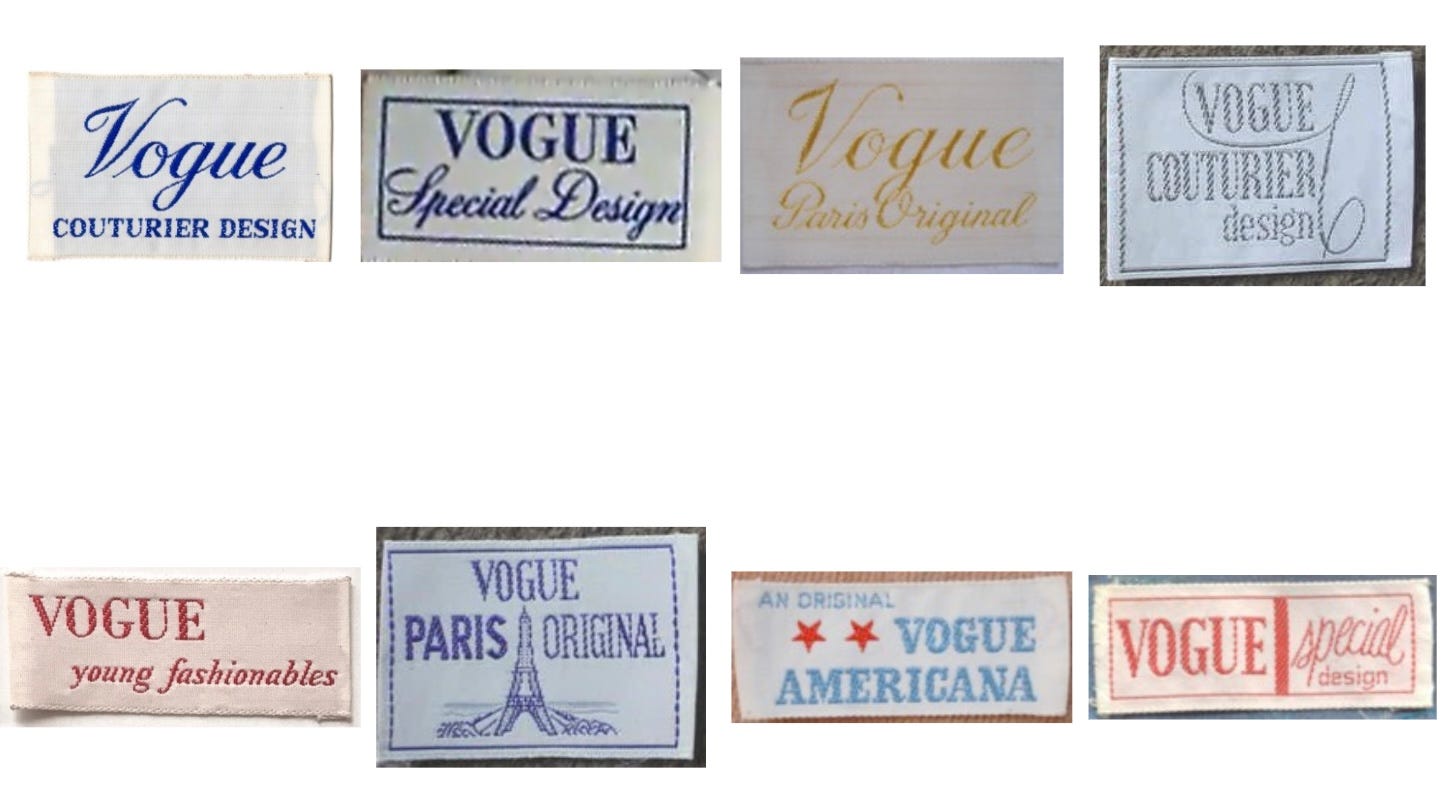
From the original toiles, Vogue Pattern Service traced them to create patterns and worked out the sizing in the American Vogue studios. Any changes made, such as adding a dart when sizing up or offering an evening dress in both long and short lengths, required the couturier’s approval.
Couture’s Evolution & Future
In the 1990s, designers like Jean Paul Gaultier disrupted couture tradition with subversive, avant-garde, and sportswear-inspired collections.
Today, couture has been largely replaced by luxury ready-to-wear, and with a shrinking clientele and rising costs, its future can feel uncertain.
This past January, Alexis Mabille presented a couture collection and show entirely created with AI. What do you think of that?? Can it still be called haute couture? Will other designers follow suit? Or will couture, as it has long been practiced, remain the north star for fashion, an evolution of high dressmaking that bursts with imagination and celebrates extraordinary skill?
3. Inside the Couture Pattern Museum: The Work of Preservation
The Couture Pattern Museum focuses on preservation, education, and pattern digitization, keeping the knowledge of couture workrooms alive for future generations.
In couture, the design process often begins with the fabric. Starting from an initial sketch, the fabric is draped on the form, where the garment’s fit, balance, shape, movement, and line are refined.
From this draped foundation (often called a toile in the workroom), the design takes form. After approval, it’s carefully marked, flattened, and traced, and the paper pattern is born.
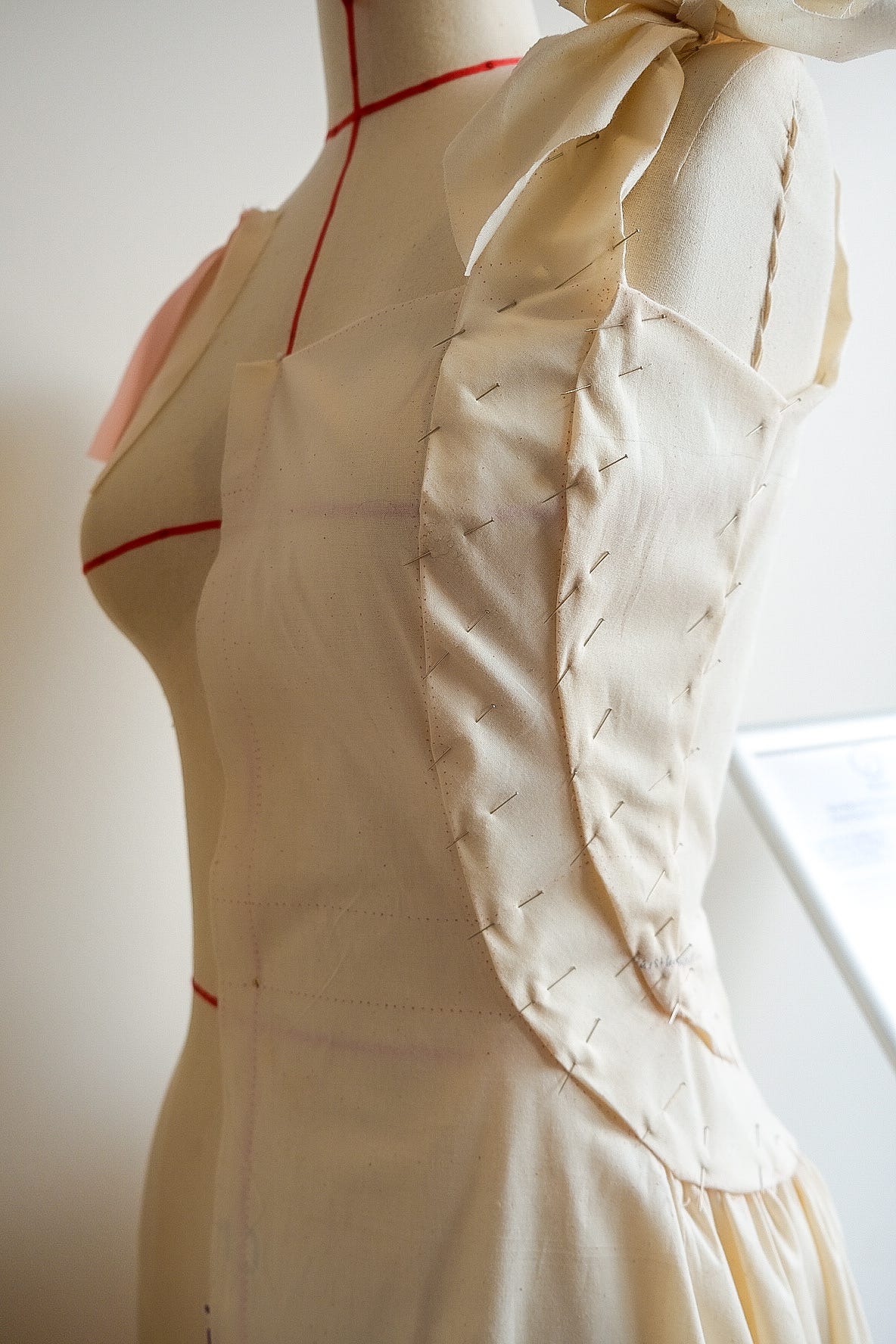
This fabric-led method encourages beginning with feel and proportion rather than specs and measurements. The designer (or toileist or lead assistant) lets the fabric inspire technique and guide decisions. This is the kind of tacit knowledge the museum works to preserve, knowledge that lives in process, not just in finished garments.
Cristóbal Balenciaga is a perfect example. His designs live in the decisions he made while draping on the form and fitting on the body.
A Balenciaga sheath, currently on display, appears simple on the outside, but the interior tells a different story. He even considered the width of his seam allowances as a way to weight and balance the dress.
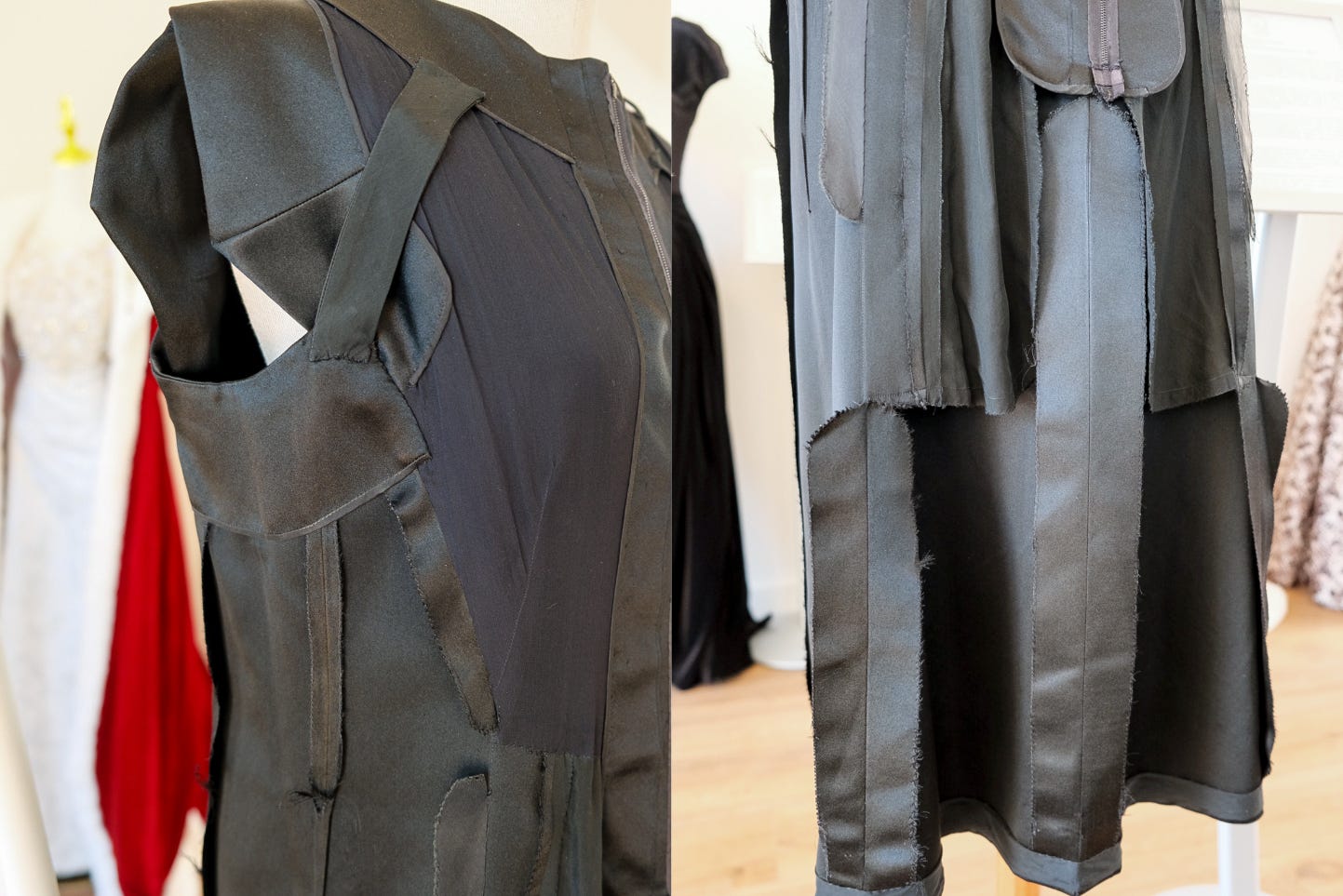
This way of working is what makes these patterns so meaningful.
“People sometimes ask, “Who would even be interested in old sewing patterns?”
These are not hobby or craft patterns. They capture the engineering and discipline behind haute couture. They hold the technical instructions for documented haute couture garments. Every line, crease, notch, and pleat records how designers like Jacques Fath cut and shaped their designs.”
—Cara Austine-Rademaker, Founder and Fashion Historian, via couture.pattern.museum

Plus, isn’t it wonderful that techniques and patterns straight from couture ateliers can be brought into your home workroom, and that these patterns are now being archived and digitized as part of the museum’s preservation efforts?
If you’d like to explore more of the museum’s work in preservation, education, and digitization, you can visit:
Website: www.couturepatternmuseum.com
Instagram: @couture.pattern.museum
4. Inspiration from the Museum
From draped toiles to finished couture looks, the museum offers a rare window into the stories behind each pattern. Here are a few highlights from my visit.
What Would Couture Be Without Dressmaker Forms?
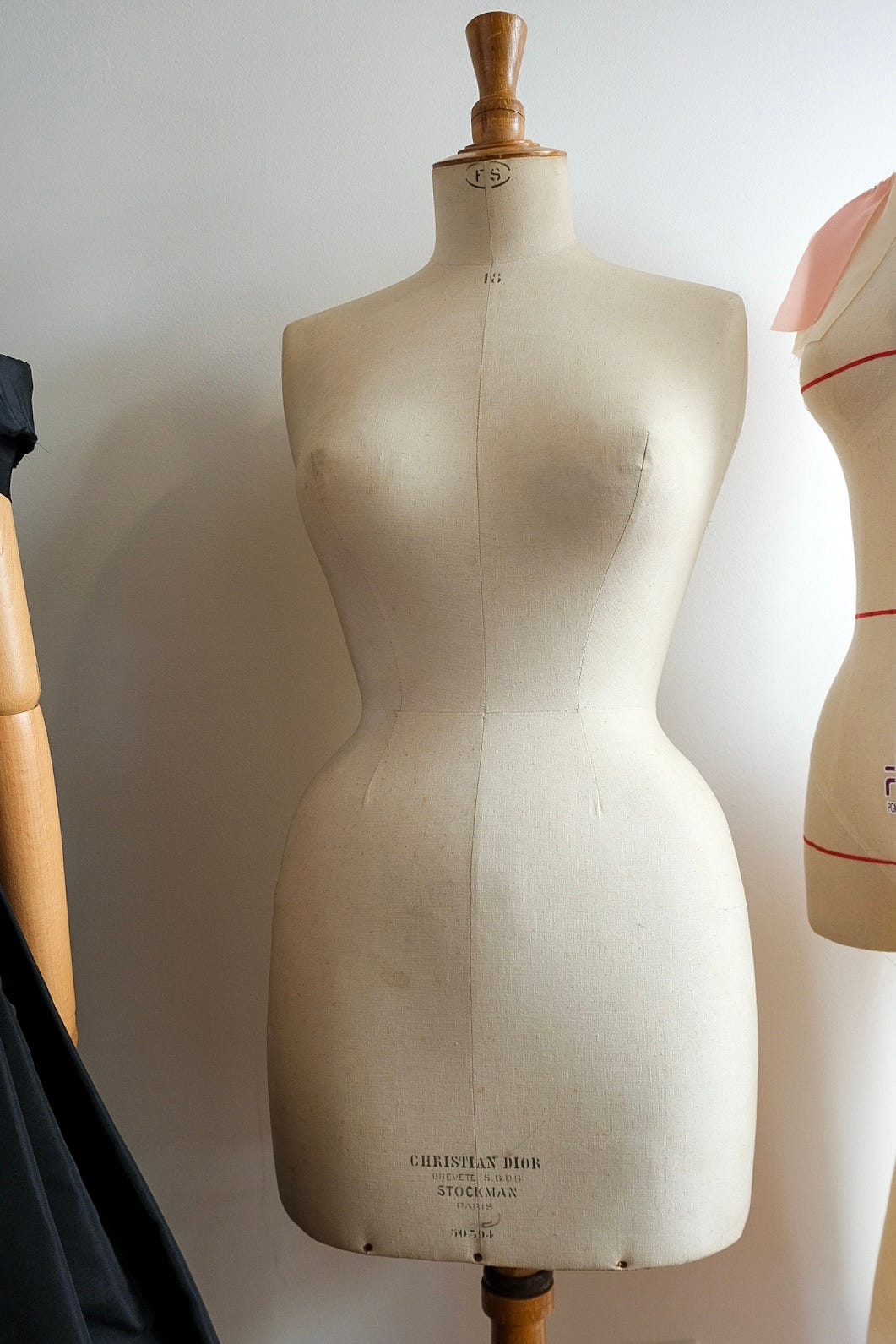
On display is a Stockman from the house of Dior. To quote Amy Verner in Vogue, “If there is one brand in fashion that is somehow both ubiquitous and unknown, it is Stockman, the superlative maker of mannequins.”
Made by hand in France since 1867, (Yes! Since the days of Charles Frederick Worth) Stockman forms were once customized to a client’s measurements. Nowadays, forms are fitted with zip-on covers, padded to replicate the client’s figure.
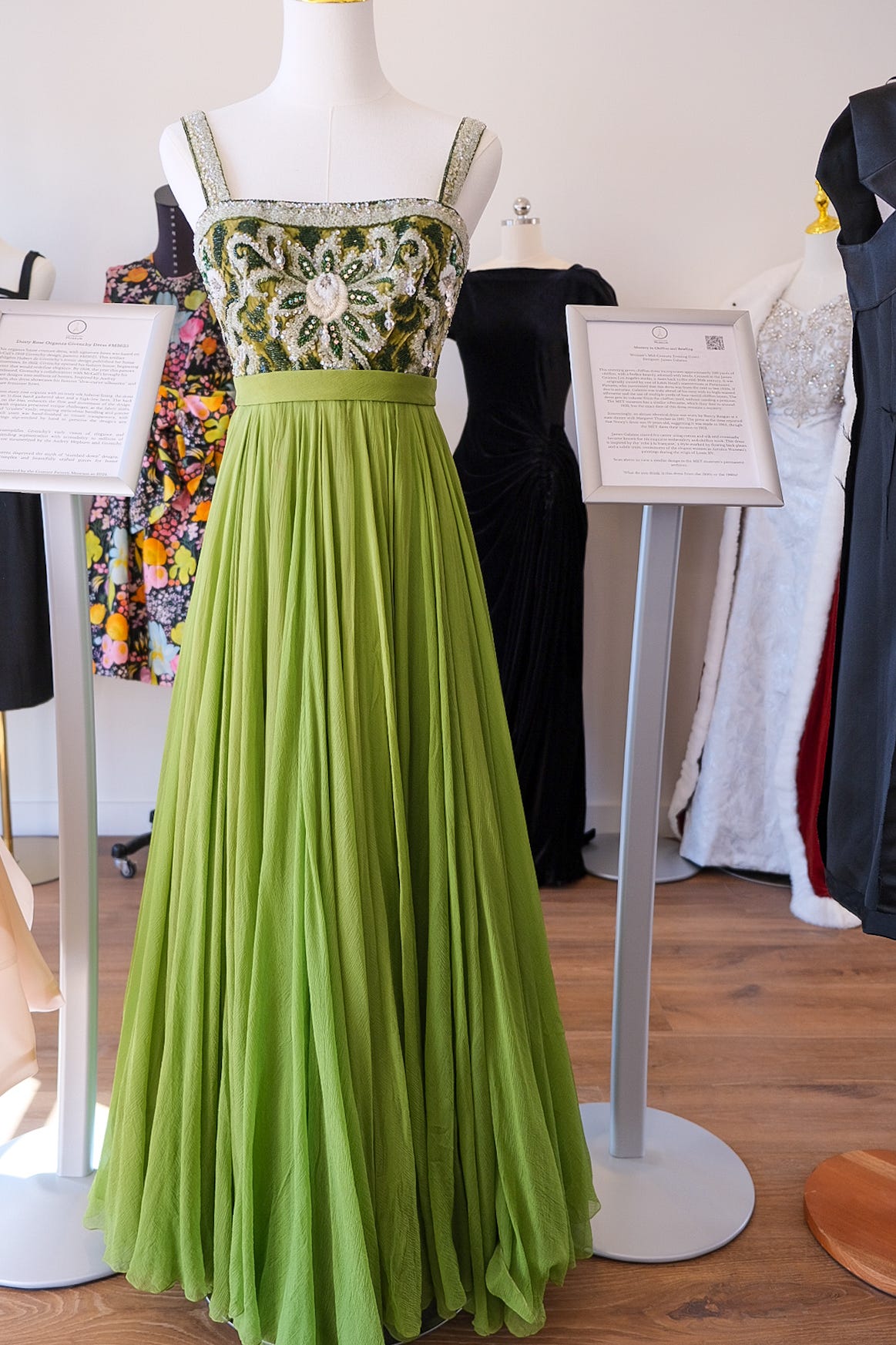
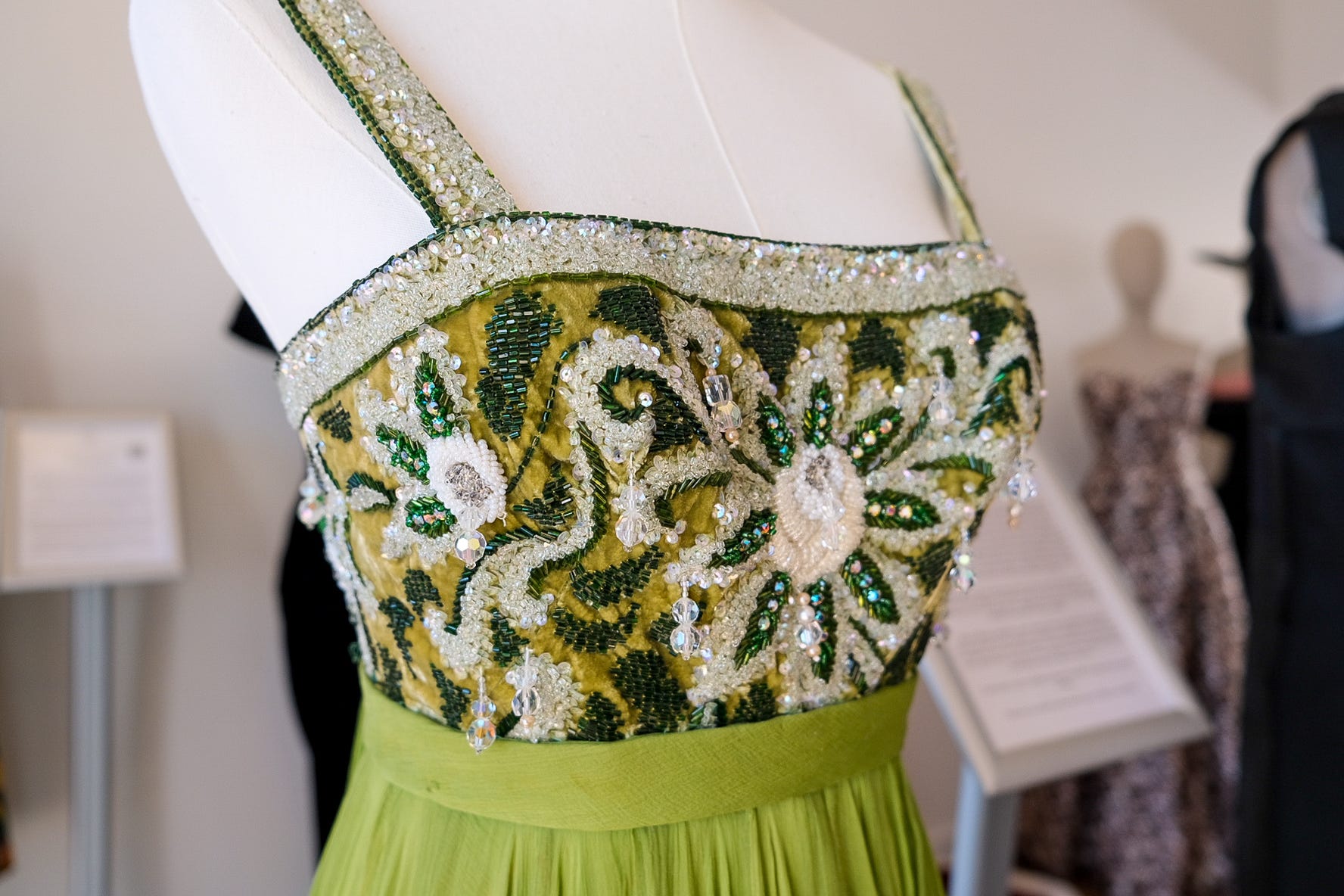
This stunning James Galanos green chiffon gown uses roughly 100 yards of chiffon to create its sweeping volume. It was originally owned by one of Edith Head’s seamstresses at Paramount Pictures, and she dates it to the mid-to-late 1950s.
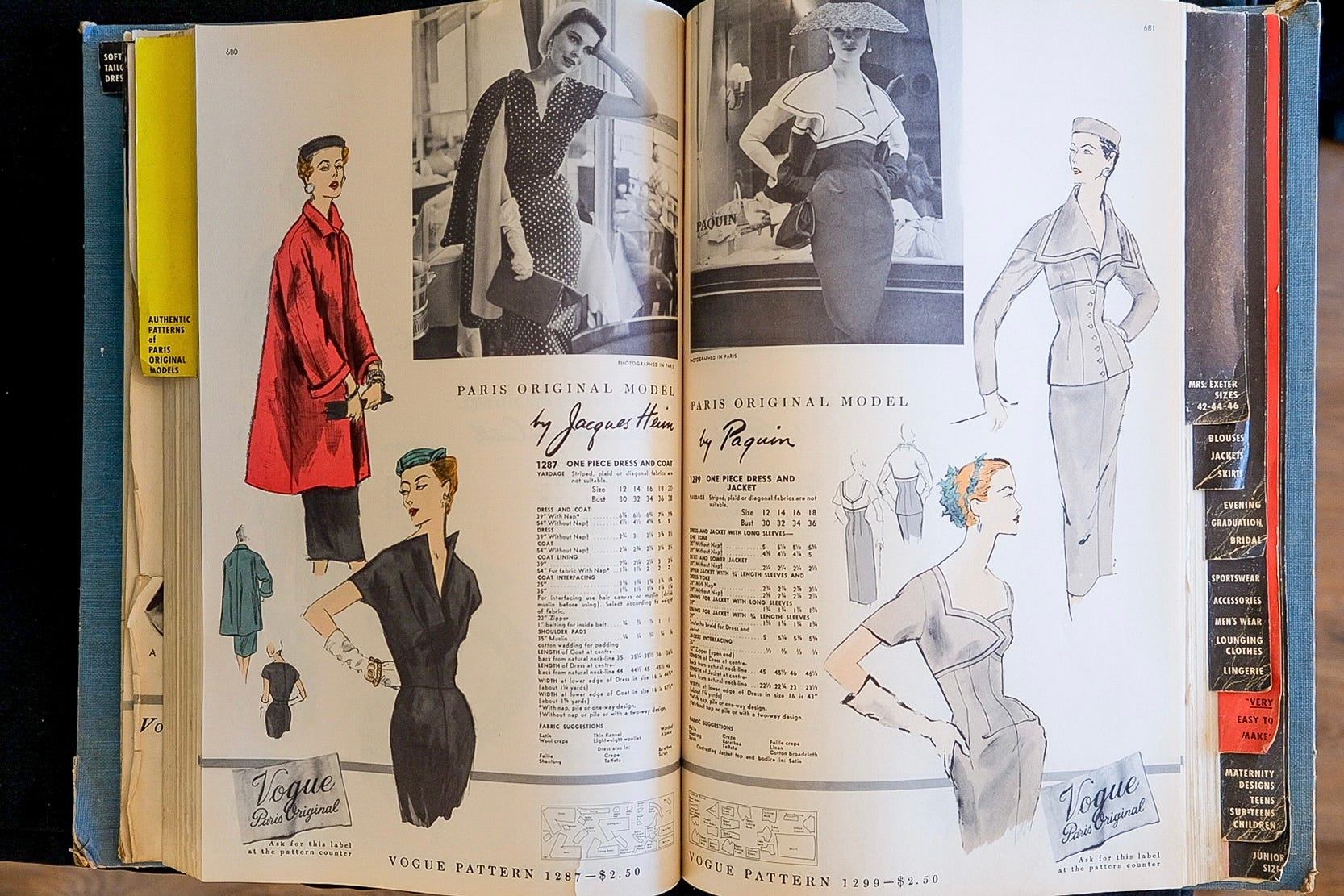
Department store counters often featured pattern books, where customers could explore the latest patterns from couture houses.
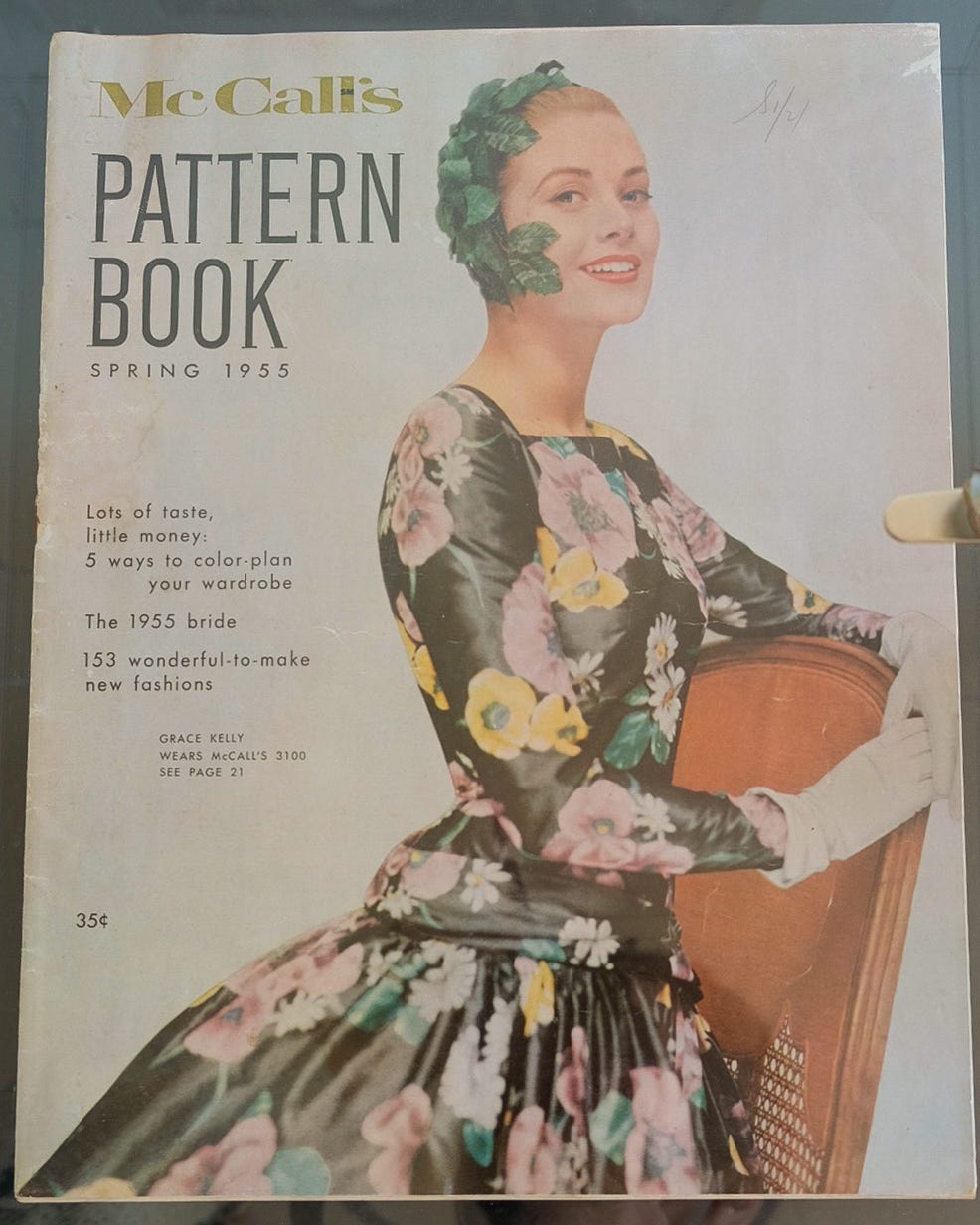
A McCall’s pattern book (Spring 1955) features Grace Kelly on the cover. She wore this dress to her first meeting with Prince Rainier at the Palace in Monaco that same year.
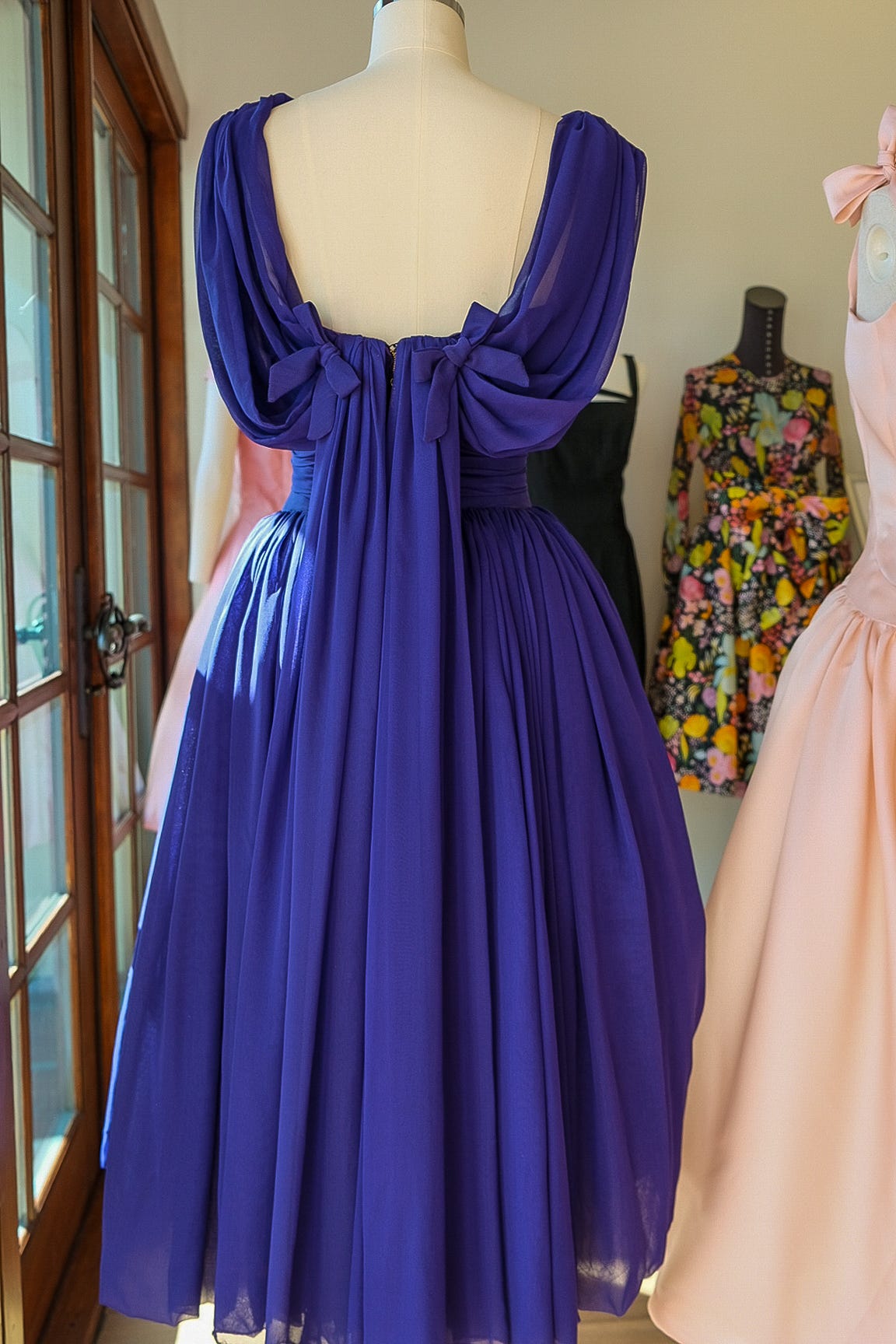
Marc Bohan designed for Jean Patou from 1954 to 1957 before moving on to Christian Dior. This 1957 Vogue Pattern Original (Bohan for Patou) forms its hem by folding the chiffon and anchoring the double layer at the waist, leaving the hemline unstitched.
How wonderful that a single visit can spark seemingly infinite inspiration. And if you can’t make it in person…
Be sure to check out the Couture Pattern Museum on Instagram. It’s a treasure trove of inspiration and couture pattern insight.


5. My Favorite Couture Sewing Books
These are my go-to couture sewing books, complementing the pattern architecture and workroom techniques found in couture paper patterns.
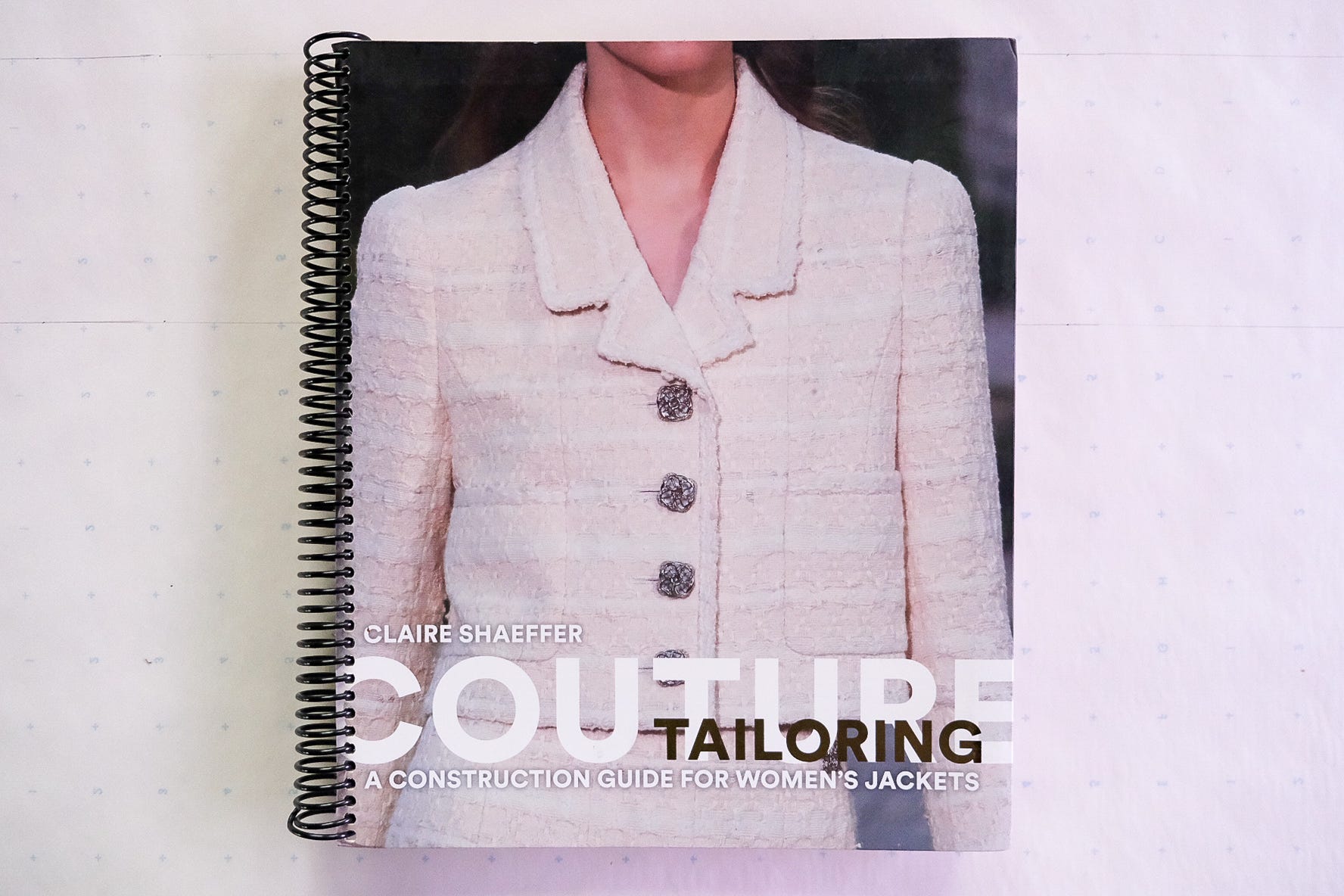
Couture Tailoring: A Construction Guide for Women’s Jackets
Bespoke tailoring. *Swoon* This manual by Claire Shaeffer is comprehensive and focused on jackets, but many of the tips and techniques translate to other garments. It’s spiral-bound, so it lays flat on your work surface while you’re referencing it. Bonus: couture hints are sprinkled throughout the margins.
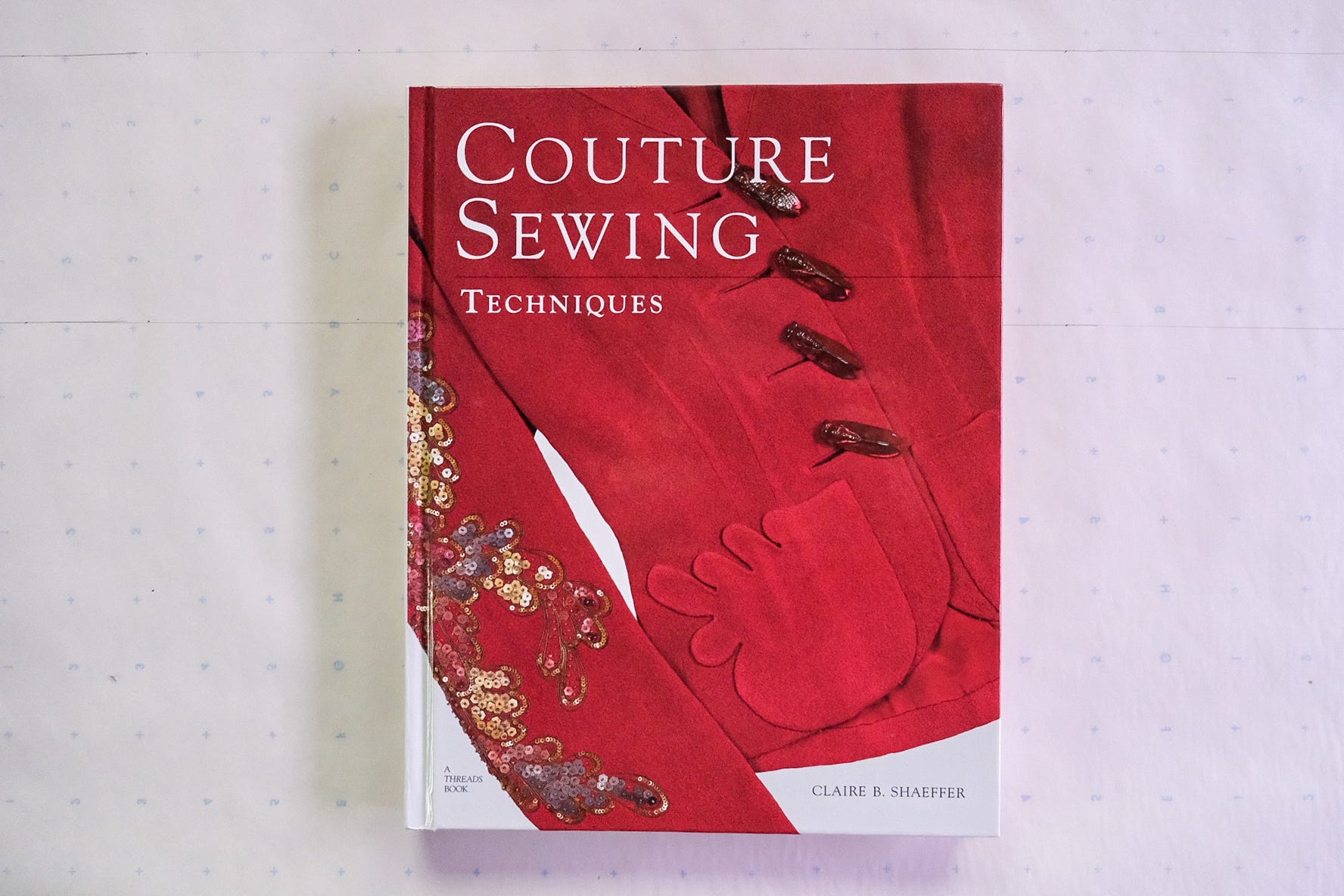
Couture Sewing Techniques
Another by Claire B. Shaeffer. She never wrote a bad book. This one is more text heavy, but ever so inspiring. Flip through and you’ll always find something new to learn.
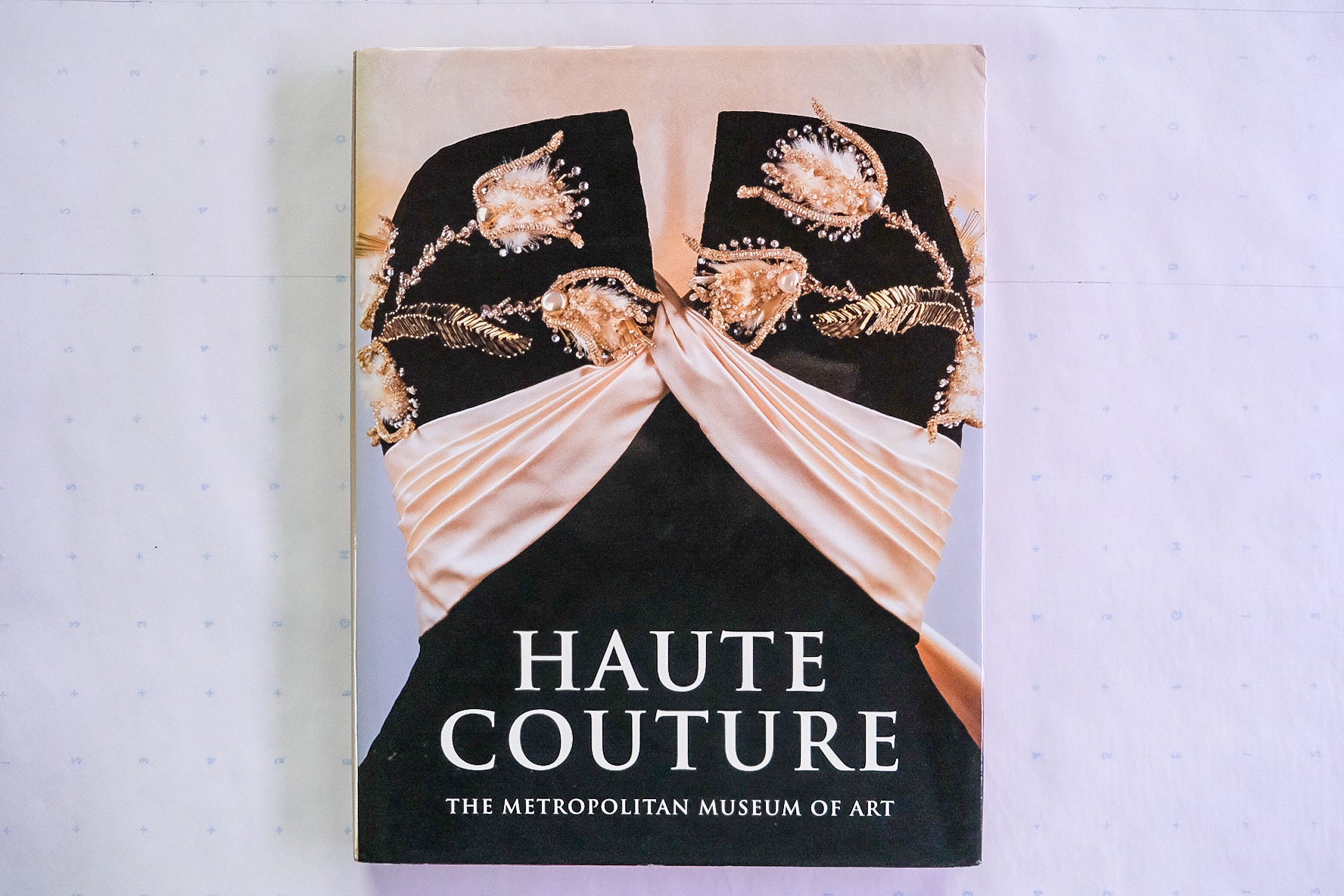
Haute Couture Book: Metropolitan Museum of Art
There are no tutorials here, but the close-up detail photos are like love letters to haute couture craft, or as authors Richard Martin and Harold Koda describe couture, “fashion’s art of supreme technical mastery and virtuoso execution.”
You can download a free PDF directly from the MET here, or find a hard copy online.
I hope you enjoyed this look into couture and a lesser-seen corner of fashion history: couture paper patterns. A heartfelt thank you to Cara and the Couture Pattern Museum for preserving and sharing this incredible work. Thank you for being here and for reading. See you next time!
~ Jane

I read every bit you wrote and cannot express enough appreciation for this brilliant overview of couture.
As a child, I dreamt of my wedding dress arriving by boat from France standing in a single container stuffed with tissue. Or one day I might be issued into an Atelier in Paris and swept upstairs for a fitting.
You beautifully portray the couture pattern museum as a sort of seed bank, keeping the bespoke alive for future resurrection.
Thank you exponentially, Jane. Your interest, knowledge and stellar ability to write, generates awe.
What a great post!